

The impetus for product development was
a report we received about
"work-related problems faced by grape farmers."
Development History
The impetus for product development was a report we received about "work-related problems faced by grape farmers."
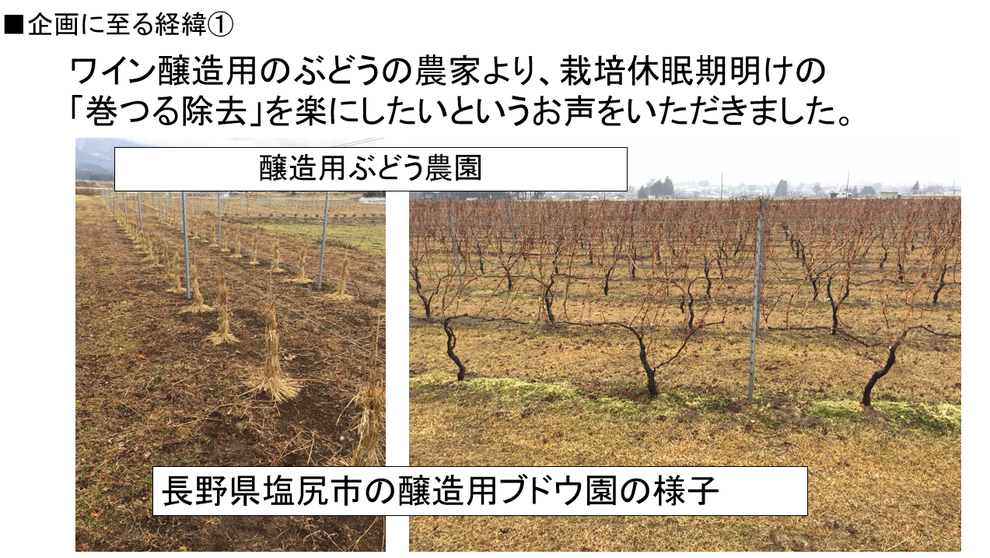
We immediately conducted a survey of grape farmers in Shiojiri City, Nagano Prefecture, regarding the challenges they faced in grape cultivation. We discovered that "removing grape tendrils to prevent disease" placed a significant physical strain on the workers.
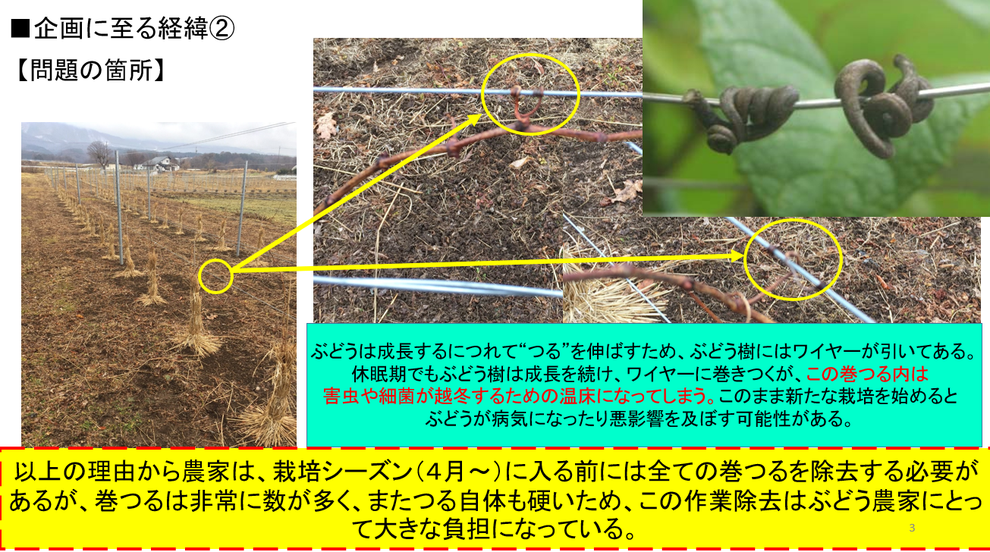
But why is "removing grape tendrils" necessary to prevent disease in the first place?
The answer is that grape tendrils are breeding grounds for the fungi that cause ripe rot and black rot.
To reduce the risk of these diseases, it is recommended to thoroughly remove the grape tendrils, which serve as a wintering site for the pathogens.
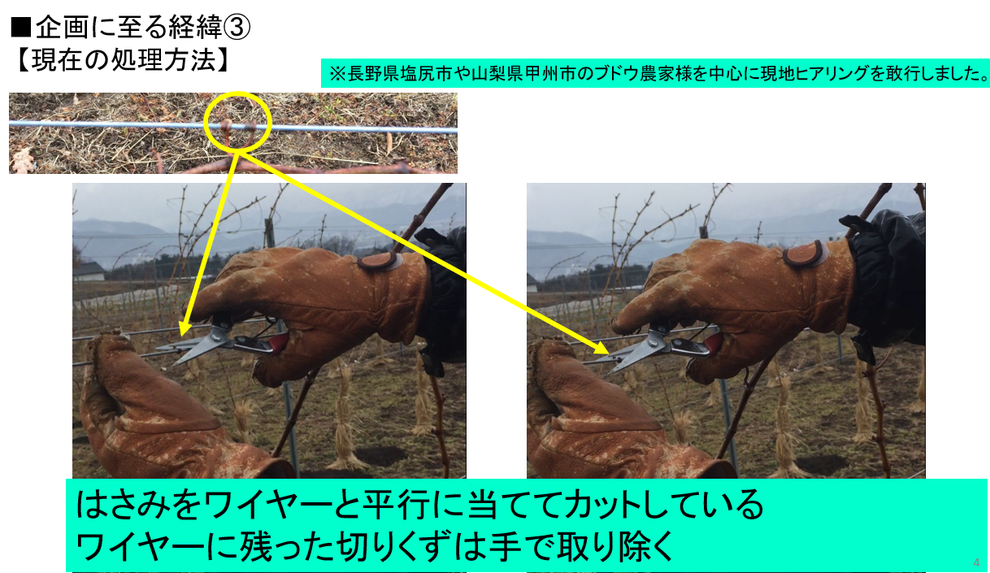
However, because these grape tendrils are extremely tough and plentiful, removing them with scissors requires considerable grip strength and physical stamina.
Thus, while farmers understood the importance of removing grape tendrils, they often found themselves unable to completely remove them.
Reducing work time, reducing labor, and reducing manpower... We kept in mind the need to achieve all of these goals, and it took five years of repeated development ideas and on-site testing.
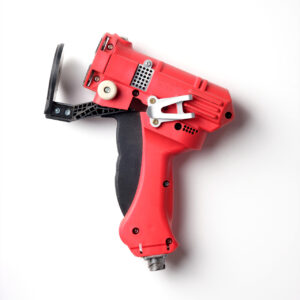
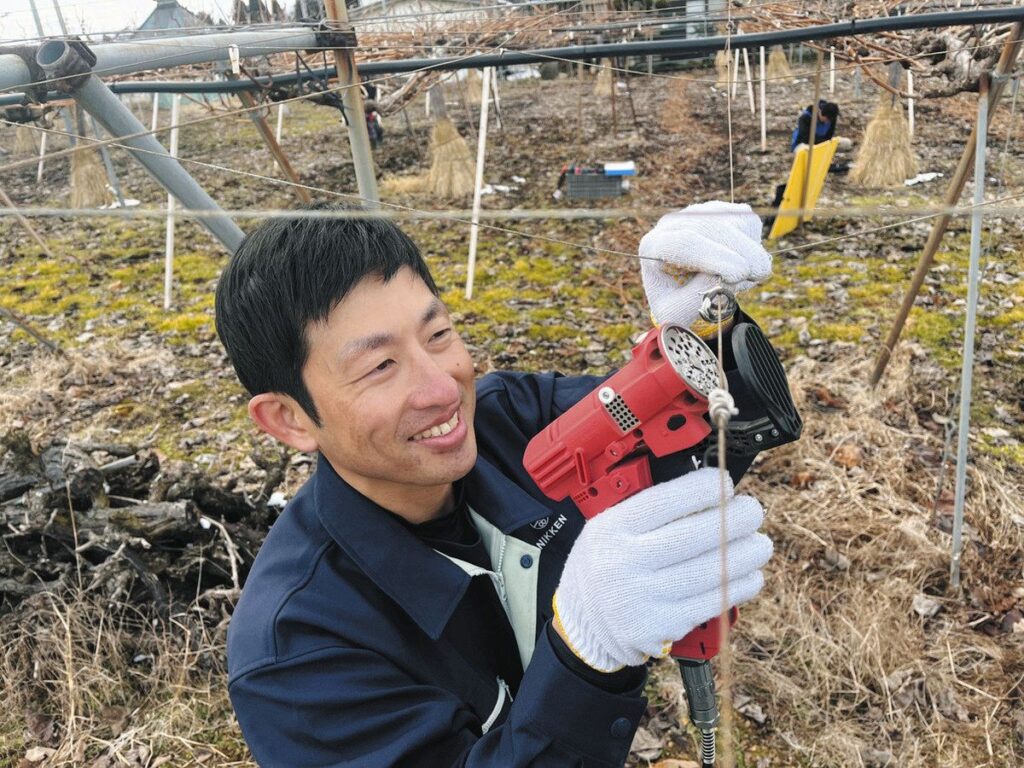
The final solution we arrived at was our first attempt at an electric tool, the "Electric Grapevine Remover," incorporating our company's unique cutting technology.
It has three features:
1. It uses a grater-shaped rotating blade to shave off grape tendrils.
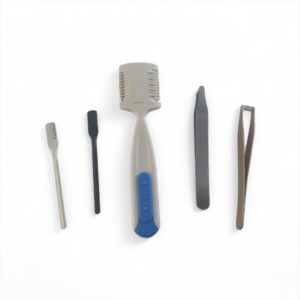
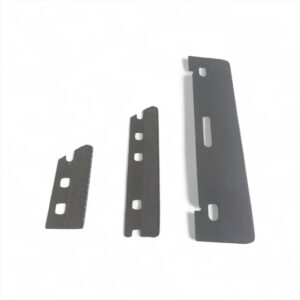
2. It features replaceable blades, similar to those found on razors, so even if the blade becomes dull due to wear, it can be restored by simply replacing it.
3. Easy operation: Simply grip the handle.
This tool allows anyone to quickly and easily remove tangled grape tendrils, saving time and effort while reducing the risk of disease with fewer personnel.
Compared to existing pruning shears, the initial cost is higher, but its overwhelmingly superior processing power ultimately results in a significant reduction in running costs.
Sold over 400 units in less than a year since its release!
Farmers who have purchased this machine have told us that they will never be able to go back to working without it.
Key development priorities
- The tool's shape and functionality must be suitable for removing tangled grape tendrils.
- It must reduce the physical strain on the worker, improve work efficiency, and reduce strain on the wrist
- The tool must not damage the wire
The Most Challenging Part of Development
IAlthough the product was released in 2023, development actually began seven years earlier, in 2016.
Originally, grape growers removed tendrils using scissors, so our initial development concept also focused on creating a scissor-type tool. However, we soon realized that this approach would not significantly reduce the physical burden on growers. As a result, we decided to shift our development direction to an electric tool.
At that time, our company had no experience with electric tools. While exploring possible designs and selecting components, we gradually built connections and eventually found a manufacturer willing to handle both the design and production. Even then, the product was far from complete, as there were no existing examples of such a tool.
We spent a great deal of time searching for the right specifications that would meet the needs of growers, including cutting efficiency, processing speed, product size, and weight. Another challenge was that tendril removal takes place only during the winter dormant season, which limited opportunities for on-site testing and contributed to the long development period.
Eventually, the product specifications were finalized, but many concerns remained. Mass production would require significant investment in molds. Although our research indicated a considerable number of potential users, we could not be certain whether growers would actually purchase the product.
To reduce the risk as much as possible, we decided to start with small-batch production using a 3D printer, producing only the necessary quantity. In addition, instead of selling the product immediately, we chose to offer it through a rental program so that growers could easily try it. This approach allowed us to gradually increase awareness in the market.
As a result, about 100 grape growers participated in the rental program, which gave us confidence to move forward with mass production. We then proceeded with mold manufacturing and began full-scale production. Finally, the product was officially launched in the fall of 2023.
Developing this product marked a major step for our company, as we expanded beyond our traditional razor business in order to meet the needs of agricultural producers.
Ear Hair Remover

Development History
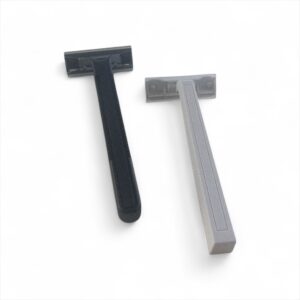
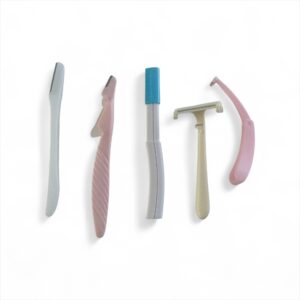
In August 2018, we launched the industry's first tweezers in Japan specifically designed for ear hair removal. As our name suggests, our core business is razors. Previously, we launched products for removing unwanted hair from the eyebrows, face, head, nose, shins, arms, and legs.
Our next focus was ear hair. Research revealed that men begin to grow ear hair around their 40s, so we began exploring a shaving product that would leverage our strengths and target this demographic. However, we faced a major challenge. Unlike eyebrow, facial, and shin hair, ear hair cannot be seen with the naked eye. Some customers expressed concerns and reservations about "applying a blade to an area that cannot be seen."
In response to this, we shifted our focus from "shaving" to "plucking" products. Plucking tools eliminate this concern, even in areas that cannot be seen. However, regular tweezers are unable to reach hair in unseen places. So, we added another innovation. By giving the tips of the tweezers a "spring shape," we developed a way to approach hair with a "surface" rather than a "point."
When we sold the completed product through crowdfunding, we received support from 1,848 backers, totaling 5,618,510 yen. This gave us momentum to expand sales to e-commerce sites such as Amazon and Rakuten, and the product now ships over 10,000 units per year.
It was a memorable product development project that bore fruit through a consumer-oriented approach, regardless of shaving.